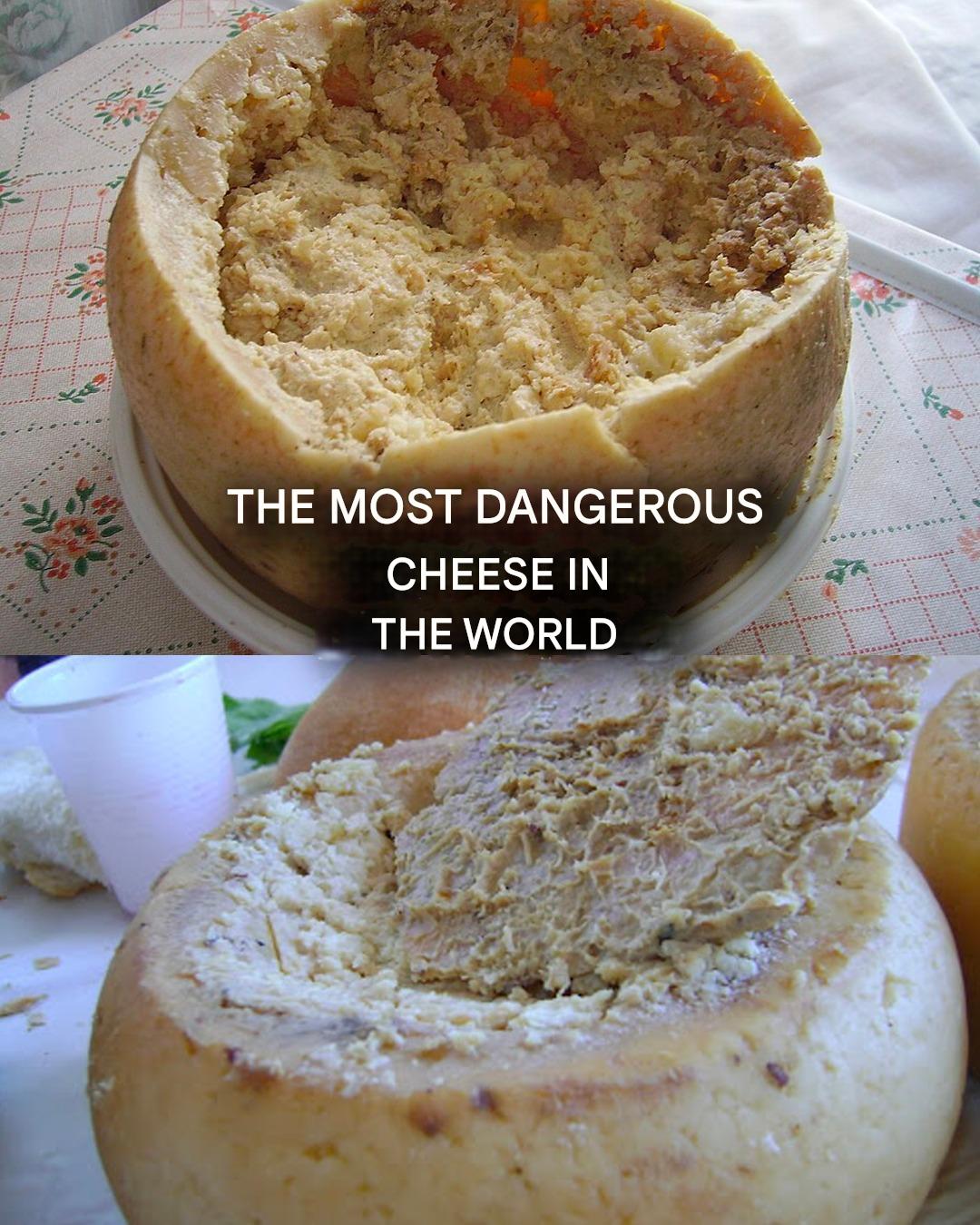
Casu Marzu is one of the most controversial and discussed cheeses in the world. Best known for its unusual appearance – infested with live worms that feed on its paste – Casu Marzu is considered by the Guinness World Record to be one of the most dangerous cheeses in the world. But is it really that risky?
This Sardinian cheese is the result of a centuries-old tradition, and is produced so that the worms (larvae of the cheese fly) change its texture and flavor, giving it a unique softness. Although Casu Marzu has a long history, it has been banned throughout Europe for food safety reasons. But there is another side of the story that is worth exploring.
🧀 Casu Marzu: what is it and how is it produced?
Casu Marzu is a traditional Sardinian cheese that takes its name from the Italian "rotten cheese", due to the fermentation process activated by worms. These worms, called Piophila casei larvae, are introduced into the cheese during the maturation process. The worms feed on the cheese paste, causing a very particular softness.
🔸 How is it prepared?
Casu Marzu is prepared from Pecorino Sardo.
During aging, the larvae enter and, by eating the cheese, change its structure, creating a creamier consistency.
The final product is covered with live larvae, which can move freely when the cheese is served.
🦠 Is Casu Marzu dangerous?
Casu Marzu has been banned by the European Union because it does not comply with health and food safety regulations. The live worms inside the cheese and the fact that it is served unpasteurized make the product potentially dangerous.
However, despite its "dangerous" appearance, the real risks are much lower than you think. Health authorities have stated that when consumed correctly, Casu Marzu does not pose an immediate health risk.