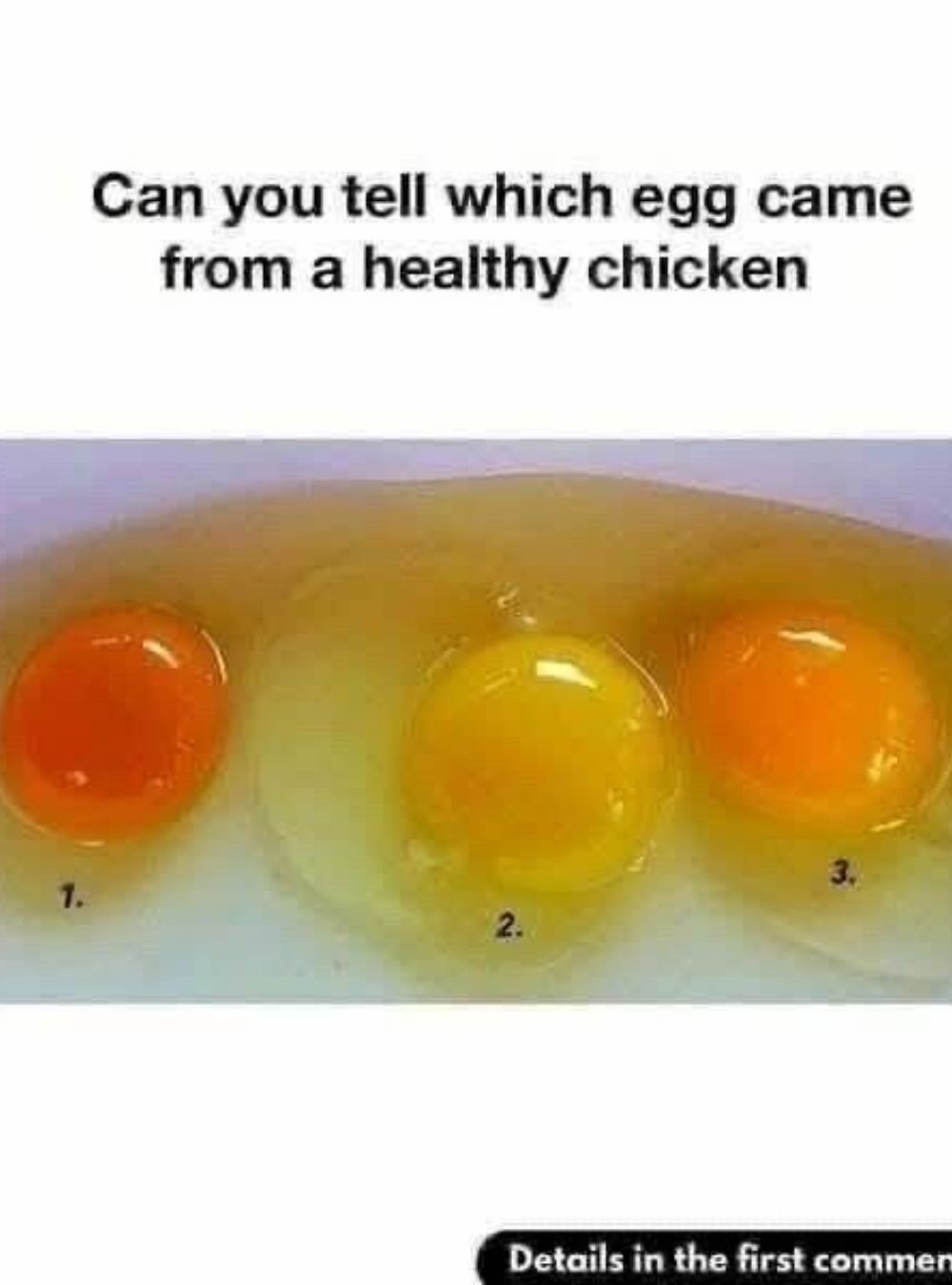
Most of us crack eggs without a second thought. They land in the pan, the bowl, or the batter, and that’s the end of it. But if you pause for just a moment, what you see inside can quietly reveal a surprising amount about where that egg came from—and how well the hen that laid it was doing.
An egg is more than a cooking ingredient. It’s the result of a chicken’s daily life, shaped by what it eats, how much stress it experiences, and the conditions it lives in. Long before nutrition labels and marketing terms, people judged eggs by simple visual and physical cues. Those same clues still matter today.
Start with the outside. When you hold the egg, does the shell feel solid and resilient, or thin and fragile? Eggs laid by well-cared-for hens tend to have shells that feel firm and evenly formed, without weak spots, chalky areas, or hairline cracks. This strength usually reflects a balanced diet and a calmer environment.
Once cracked open, the texture becomes even more telling. In higher-quality eggs, the white doesn’t immediately spread thin across the surface. Instead, it stays thick and gathered close to the center. That structure is a quiet sign of freshness and good overall nourishment.
Then there’s the yolk. Rather than sinking or flattening, a strong yolk sits tall and rounded. Its color can range from golden to deep orange, often reflecting a more varied diet that includes natural forage rather than grain alone. The membrane surrounding it should feel firm, helping it hold its shape.
Pay attention to what you don’t notice as well. Fresh eggs from healthy hens have almost no smell at all. Any strong or unpleasant odor is a clear warning sign. Minor specks inside the egg are usually harmless, but repeated or excessive irregularities may point to stress or imbalance.
If you’re unsure, a simple water test can offer extra insight. Eggs that sink and rest flat are generally newer, while those that tilt or float have developed a larger air pocket over time.
Taken together, these small details form a bigger picture. Eggs produced by hens living in cleaner, lower-stress conditions with balanced diets tend to be more consistent, more nutritious, and more reliable in the kitchen. Sometimes, the best quality check doesn’t require a label—just a closer look.