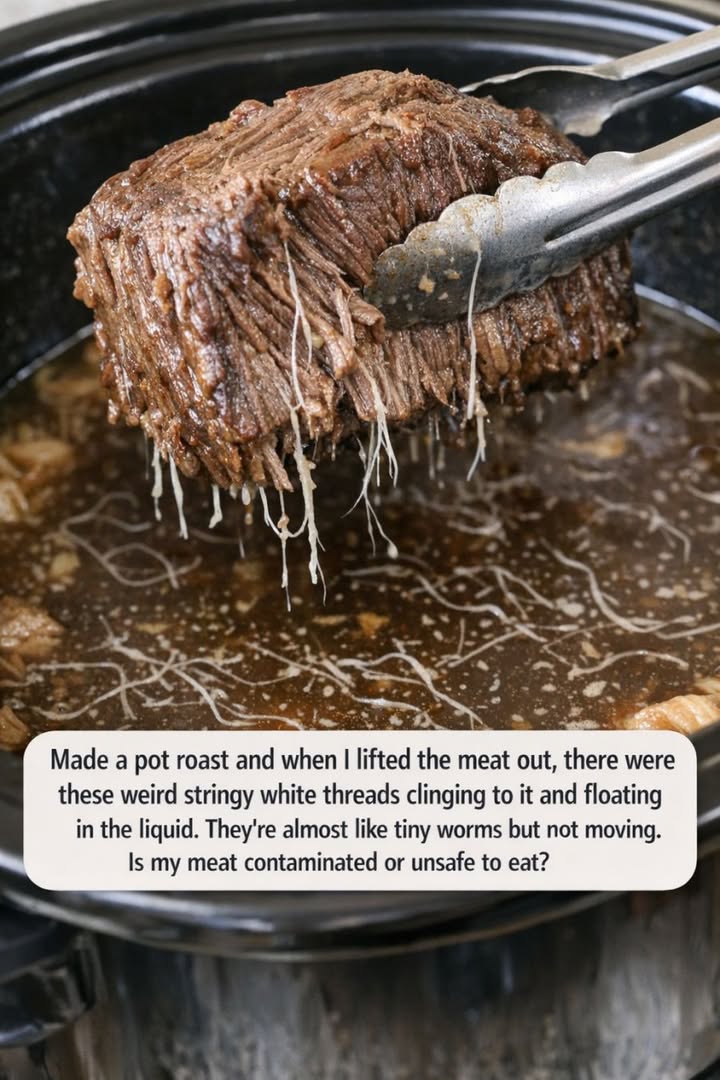
Pot roast is a classic comfort food, beloved for its tender meat and rich flavors. However, sometimes you might encounter unexpected surprises that leave you questioning its safety. One such scenario is when you lift the meat out of the pot and find strange white stringy threads clinging to it and floating in the liquid. These can be alarming at first glance, especially if they resemble tiny worms.
In this article, we'll explore what these white stringy threads are, whether your pot roast is safe to eat, and how you can ensure your meal remains both delicious and safe. By understanding the nature of these threads and how to differentiate them from actual contaminants, you can enjoy your pot roast with peace of mind.
Advertisement
1. What Are Those White Stringy Threads in Your Pot Roast?
The white stringy threads you see are most likely strands of collagen and connective tissue, which are a natural part of the meat. When cooked, collagen breaks down into gelatin, resulting in the tender texture associated with slow-cooked meats. These threads can become more visible in the cooking liquid as they separate from the meat fibers.
These threads are generally harmless and a normal part of the cooking process. However, if they seem excessive or unusual, it's worth taking a closer look to ensure they aren't something else.
2. Collagen, Connective Tissue, and Why They Turn Stringy
Collagen is a protein found in connective tissues of animals and is particularly abundant in tougher cuts of meat like chuck or brisket. When slow-cooked, collagen breaks down over time, turning into gelatin. This process is what gives pot roast its rich mouthfeel and tender texture.
As collagen dissolves, it can form stringy threads that are more noticeable in the liquid. Cooking the meat at a low temperature for a longer duration, such as 3-4 hours at 325°F (163°C), helps break down these fibers completely, minimizing their stringy appearance.