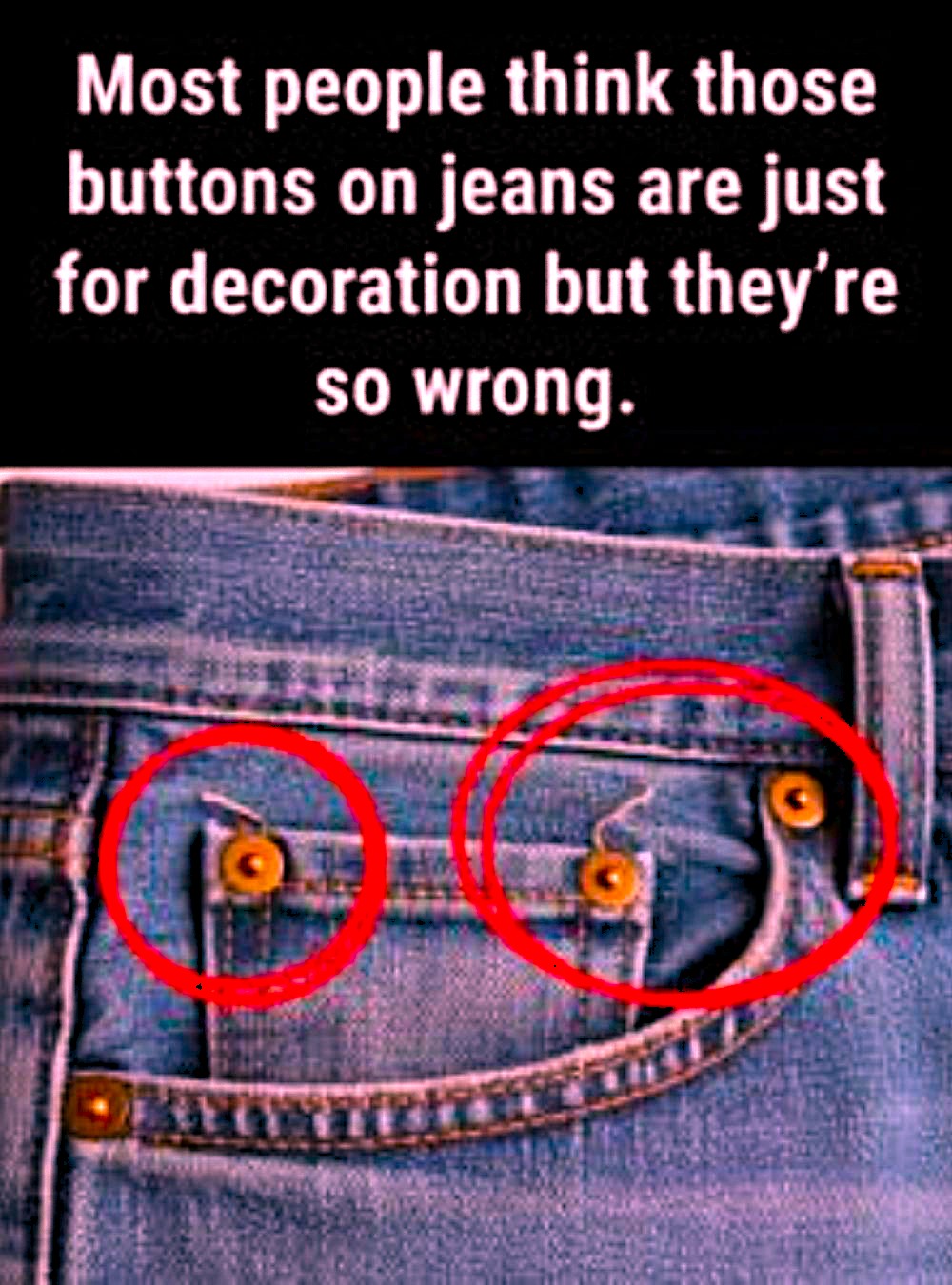
Most of us slip into a pair of jeans without giving a second thought to the tiny metal buttons scattered around the pockets. They’re so common, so ordinary, that they often go unnoticed. But these little rivets—those small round metal pieces—aren’t there for decoration or style. In fact, they’re one of the most important features of denim design. Their purpose is so clever and so essential that once you learn the history behind them, you’ll never overlook them again.
The origin of these rivets goes all the way back to the 1870s, when denim was worn almost exclusively by miners, ranchers, and laborers. These workers needed clothing that could withstand brutal conditions—heavy tools, constant movement, and demanding physical labor. A tailor named Jacob Davis noticed that the same areas on men’s pants were always tearing: the pockets, corners, and seams where the most tension was applied. Instead of simply repairing the damage over and over, he came up with a simple but brilliant solution.
Davis began reinforcing the weakest parts of the pants with small metal fasteners. The improvement was immediate. No more pocket rips, no more seams splitting open. Realizing he had created something revolutionary, he reached out to Levi Strauss for help securing a patent. In 1873, the two formally patented the riveted denim design—and jeans as we know them were born.
So what do rivets actually do? Their job is straightforward but crucial: they disperse stress across the fabric so that pulling, stretching, or carrying weight doesn’t cause the material to rip. These rivets—made from tough metals like copper or brass—perform far better than thread alone, especially in high-tension areas. That’s why jeans reinforced with rivets last significantly longer than those relying solely on stitching.
Today, many denim brands continue to include rivets as both a functional feature and a nod to classic craftsmanship. Others use heavy-duty stitching instead, either for aesthetic reasons or to avoid scratches from exposed metal. But whether they’re visible or subtly incorporated, that original idea has shaped more than a century of denim evolution.
So the next time you pull on your favorite pair of jeans, take a moment to notice those tiny metal dots. They’re not just there for show—they’re a reminder of how a small, inventive detail from over 150 years ago helped turn denim into the durable, iconic fabric we still depend on every day.